Infinite Jump Screenshots
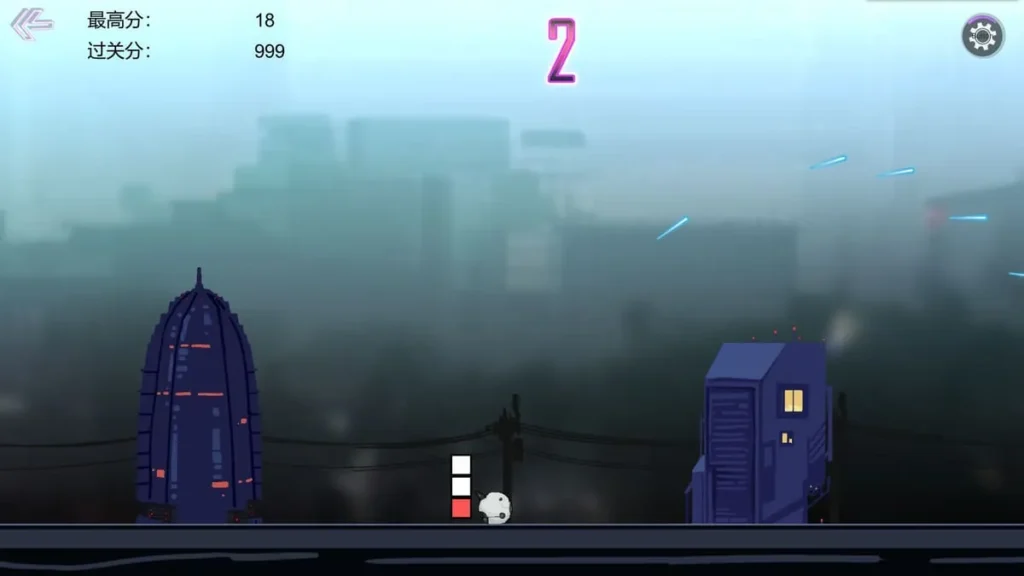





Infinite Jump review
Master Momentum Jumps and Addictive Combos in This Daring Game
Ever felt that rush of chaining perfect jumps in a platformer that just clicks? Infinite Jump hooked me from the first momentum-based leap, blending precise physics with endless combo potential. This isn’t your basic hop-and-skip game—it’s a fluid, skill-driven adventure where every velocity shift propels you higher. I’ve spent hours soaring through narrowing corridors, dodging hazards, and unlocking custom looks that scream style. If you’re craving a platformer that rewards timing and daring, dive into Infinite Jump’s core mechanics and discover why it’s my go-to for adrenaline-fueled sessions. Let’s break down how to dominate its infinite possibilities.
How Does Infinite Jump’s Physics Create Unmatched Flow?
I still remember my first real ‘aha!’ moment in Infinite Jump. I was barreling down a corridor, fleeing a cascade of falling blocks, and without thinking, I leapt. Instead of a simple hop, my character soared, the speed from my run transforming into a glorious, arcing flight that carried me clean over a spike pit. In that moment, the game clicked. This wasn’t about static platforms and predictable hops; it was about becoming a force of nature, harnessing motion itself. 🚀 That feeling, that incredible sense of flow, is the direct result of the game’s brilliant Infinite Jump physics.
So, how does Infinite Jump work? It all starts by throwing the old platformer rulebook out the window. Forget jumping from a standstill being the same as jumping from a sprint. Here, your movement is your power.
Unlocking Momentum-Based Jumping Secrets
At its core, momentum-based jumping is the revolutionary idea that your horizontal speed directly fuels your jump’s distance and arc. The faster you’re moving when you press jump, the farther and flatter your trajectory becomes. It’s the difference between hopping in place and achieving a long-jump champion’s glide. This velocity jumping mechanics system means every sprint, slide, and turn is potential energy waiting to be unleashed.
But the magic doesn’t stop at launch. Mid-air, you retain exquisite control. You can gently steer your character, using their remaining momentum to curve around obstacles or nudge toward a distant ledge. It creates a fluid, almost swim-like feeling in the air, where you’re not just following a pre-determined parabola—you’re actively piloting it. Mastering this is the key to moving from a clumsy jumper to a graceful aerial artist.
Here are 5 practical tips to start mastering momentum-based jumps:
- Build Speed Before You Leap: Always get a running start! A jump from a full sprint covers dramatically more ground than a jump from a walk.
- Use the ‘Push and Pull’: Need to cross a huge gap? Run backwards to the edge of a platform to get maximum runway, then turn and sprint forward for the jump.
- Steer, Don’t Jerk: In the air, use subtle directional taps to adjust your path. Sharp turns kill momentum; gentle curves preserve it.
- Chain Your Landings: Hit the ground running! The moment you land from one jump, immediately sprint into the next to maintain and build your velocity.
- Practice Wall-Skimming: Brush against a wall mid-jump. The slight friction can help you make micro-adjustments to your angle for a perfect landing.
Why Collision Detection Feels So Intuitive?
This is where Infinite Jump physics truly separates itself from other platformer physics systems. In a traditional game, touching a wall or enemy usually means a hard stop or instant failure. In this collision detection game, those surfaces become tools.
The game’s collision detection is incredibly permissive and smart. Gently tapping a wall mid-flight won’t always stop you dead; it might just slow your momentum slightly, letting you rebound and redirect. Even more importantly, touching a platform’s edge or an enemy’s head is often enough to reset your jump without requiring you to fully “land” and stop. This enables those incredible, non-stop combo strings where you bounce from enemy to wall to moving platform in one fluid sequence.
Think of it like this:
| Traditional Platformer Physics | Infinite Jump Physics |
|---|---|
| Collision often means STOP. | Collision often means FLOW. |
| You must be “grounded” to jump again. | Many surfaces can grant a “jump reset”. |
| Enemies are obstacles to avoid. | Enemies can be stepping stones in your combo. |
This intuitive system encourages daring play. Instead of avoiding danger, you learn to use it, weaving through threats to extend your aerial ballet. It makes the platformer physics feel less like a set of restrictions and more like a dynamic playground. 🎪
Progressive Challenges That Build Your Skills
The genius of how does Infinite Jump work is revealed through its masterful level design. You don’t get thrown into the deep end. Early stages are wide-open, letting you experiment with building speed and chaining basic jumps. You learn the feel of the velocity jumping mechanics in a safe space.
Then, the training wheels come off. Corridors narrow, forcing precision. Moving platforms appear, requiring you to time your momentum-based jumps to meet them. Soon, you’re navigating gauntlets of spinning blades where a millisecond mistiming ends your run, or dancing across disappearing blocks that challenge you to maintain speed without a solid footing. Each new element tests a specific skill, building upon the last until you’re executing complex maneuvers without conscious thought.
I’ll never forget the level with the rising lava. I mistimed a jump, falling behind the safe climb. With the heat at my heels, I spotted a sequence of tiny, crumbling blocks and a lone enemy patrolling above. Panic turned into focus. I hit the first block at full tilt, launched off it onto the enemy’s head, used that boost to skip the next two disappearing platforms, and skimmed off the wall to just barely grab the final ledge as the lava licked my feet. It was a perfect, unplanned combo born from pure instinct and trust in the game’s Infinite Jump physics.
That’s the flow state this game creates. When you stop thinking about individual jumps and start feeling the rhythm of the level, you become unstoppable.
‘That moment when your combo hits 50 and you’re flying—pure magic!’
For beginners looking to enter that zone, my best advice is this: Embrace failure, but watch your replays. Your early runs will end in spikes and pits. That’s fine! Use the instant replay to watch how you fell. Did you not have enough speed? Did you over-correct in the air? Learn from each mistake. Start by focusing on just one mechanic—like always landing while holding the sprint button. Then add another. Piece by piece, you’ll build the muscle memory, and one day, you’ll take a leap and realize you’re not just playing the game… you’re conducting its symphony of motion. 🎻
Infinite Jump isn’t just a platformer—it’s a gateway to endless flow states through its momentum physics, combo mastery, and rewarding customization. From my first soaring leap to chaining boss defeats mid-air, it’s delivered thrills that keep me coming back. Whether you’re dodging blades or styling your avatar, the game’s depth ensures every session feels fresh. Ready to jump in? Grab it now, practice those velocity shifts, and share your highest combo in the comments—I’d love to hear your stories and tips for pushing further.